Solar power can make CCTV more practical, especially when power access is limited or unreliable. It also supports businesses that want lower energy use without giving up 24-hour security. That said, a solar CCTV setup only performs well when it is designed for your site, your camera load, and your local conditions.
If you have ever dealt with outages, long cable runs, or remote locations, solar can be a sensible option. It gives you a power source that can keep cameras running when the grid drops, as long as the system has the right panel, battery, and controller.
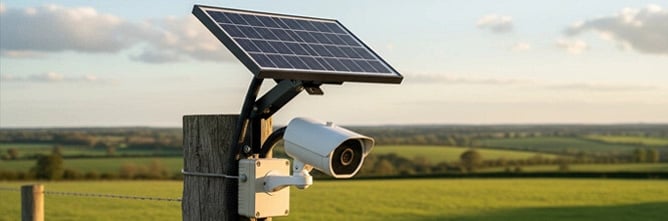
Why Solar Power Matters for Security
Security systems need consistent power. When a camera drops out, you lose coverage, and you lose evidence. For many sites, the real challenge is not the camera. It is the power supply.
Solar power helps when:
You cannot run mains power to the camera location.
The site has power cuts or an unstable supply.
You need temporary security for a project or worksite.
You want to reduce reliance on the grid where practical.
How Solar Power Panels Work With CCTV Cameras
Most CCTV cameras do not come with a solar panel as standard. Instead, a remote solar power system supplies power to the camera.
A typical setup includes:
Solar panel: captures daylight and generates electricity.
Charge controller: manages how power flows to protect the battery.
Battery: stores energy for nighttime use and cloudy periods.
Mounting and cabling: secures the system and protects connections.
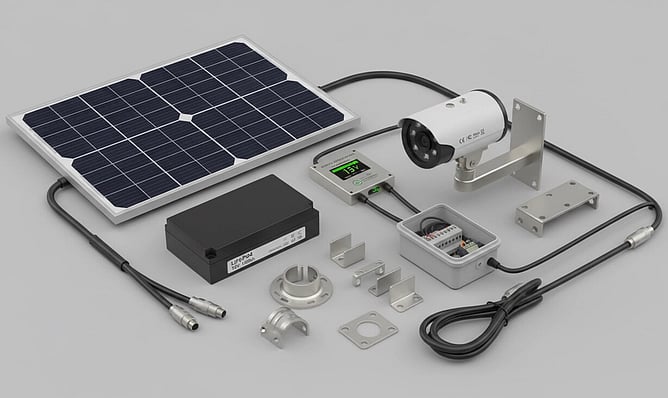
Once installed, the solar panel charges the battery during the day. The battery then powers the camera when light levels drop.
Will Solar-Powered CCTV Work in Winter, at Night, and in Bad Weather?
Yes, solar CCTV can work through winter and poor weather, but the system must be sized properly. Solar panels still generate electricity on cloudy days, although output is lower than on a clear day. In winter, shorter daylight hours also reduce charging time.
At night, the battery does the work. It supplies steady power until daylight returns. If the battery capacity is too small, you will see drop-outs. If the panel is too small, the battery may not recharge fast enough after a run of grey days.
This is why good design matters more than a bold promise.
How to Size Solar Panels and Batteries for CCTV
Sizing is the part most people underestimate. It is also the reason many DIY setups disappoint.
Here is the simple workflow we use:
Work out power draw: camera model, infrared night vision, recording, and any comms equipment (WiFi or 4G).
Estimate daily use: how many hours it runs (usually 24/7) and how much power it uses per day.
Choose battery capacity: allow for night-time use and a buffer for low-sun days.
Choose panel size: enough to recharge the battery during winter conditions, not just summer.
Confirm controller and protection: correct voltage, safe charging, and weatherproof housing.
If your camera uses more power at night, which is common with infrared, that needs to be included. The goal is simple. You want stable power through the night, winter, and a few cloudy days without stress on the system.
2026-Ready Remote Site Setups: 4G, Storage, and Monitoring
Remote CCTV is now more than a camera and a panel. Many sites need live viewing, alerts, and reliable access from a phone.
When you plan a modern setup, consider:
4G connectivity: useful where there is no fixed internet. Signal strength and antenna placement matter.
Storage choice: microSD, NVR, or cloud. Each option affects power use and data needs.
Smart alerts: motion zones and schedules reduce false notifications and save data.
Remote health checks: battery status and connectivity checks help you spot issues early.
If you want a system that just works, these choices need to match the site. A farm gate and a construction yard do not have the same needs.
Site Planning Checklist: What to Check Before You Install
A good setup can still fail if the site is wrong. Small placement issues can cut performance quickly.
Use this checklist:
Avoid shading: trees, roof lines, and nearby structures can reduce charging.
Choose the right tilt and direction: aim for steady daylight capture, especially in winter.
Mount securely: wind exposure and vibration can loosen brackets over time.
Protect cables and connectors: use proper conduit and weatherproof fittings.
Plan for cleaning: dust and grime reduce output, so panels need basic upkeep.
Think about tamper risk: mount out of easy reach where possible, or use protective housings.
A short site check can prevent long-term issues. It also helps you avoid spending money in the wrong places.
Batteries in Modern Solar Cctv Systems: What’s Changed
Battery performance is a big part of reliability. Today’s systems often use improved battery options and better controllers, which can help with longer life and steadier output.
Common battery approaches include:
Deep-cycle batteries: designed for repeated charging and discharging.
Modern lithium options: often used where weight, cycle life, or stable voltage matters.
Better charge control: modern controllers protect battery health and improve efficiency.
Batteries still wear out over time. That is normal. The best results come from correct sizing, safe charging, and sensible monitoring.
Key Advantages of Solar Power Panels for CCTV
A well-designed solar CCTV system can deliver strong benefits:
Supports 24-hour operation with battery backup.
Helps keep cameras running during power cuts.
Makes CCTV possible in remote areas without power lines.
Reduces the need for long cable runs and trenching.
It can pair well with wireless links and remote monitoring.
Panels can last for many years with basic care.
Not a Shelf Solution
Solar power panels for CCTV cameras are not a simple “ready-to-use” product. Each site has different sunlight exposure, weather patterns, camera loads, and connectivity needs. Because of that, the best setup needs proper planning.
At IQ Security, we design solar CCTV power systems around the job. If you share your site details and what you need the cameras to do, we can recommend a solution that suits your risks, budget, and performance goals.
FAQs About Solar Power for CCTV Cameras
1. What is a CCTV solar power system?
A CCTV solar power system is an off-grid setup that uses a solar panel, battery, and charge controller to power CCTV where mains power is not available.
Common parts: solar panel, charge controller, battery, camera, and any required cabling or converters
We often use this for remote sites, so cameras can run day and night without relying on mains electricity
2. How can I power CCTV using solar power?
You can power CCTV using solar by matching your camera’s power draw to the right battery size and solar panel output for your site.
Check the camera power requirements (watts) and how many hours it runs
Choose a battery that covers nights and low-sun days
Choose a solar panel that can recharge the battery using local peak sun hours
Mount the panel where it gets clear sun, then test battery status and footage access
3. What solar panels work best for security cameras?
The best solar panels for security cameras are weatherproof, correctly matched to your camera’s voltage, and easy to angle for maximum sun.
Weather resistance (look for IP-rated housing) and durable mounts
Adjustable bracket so you can aim the panel towards the sun
Voltage compatibility, since many setups run on 12V or 24V systems
4. What is a CCTV solar panel, and how does it work?
A CCTV solar panel converts sunlight into electricity, then a charge controller stores that energy in a battery that powers the camera when the sun is low or gone.
5. What solar panel is best for a security camera?
The best solar panel is the one we size to your camera load and site conditions, so it keeps the battery topped up through normal weather changes.
For small, battery-based wireless cameras, low-watt panels can work, but the output still has to match usage and sun exposure
For higher-draw CCTV or 24/7 setups, you typically need a larger panel and battery, plus the right controller
6. Can a security camera run on solar power?
Yes, a security camera can run on solar power when it has a solar panel, charge controller, and battery sized for day and night operation.
7. Can outdoor cameras run on solar power?
Yes, outdoor cameras can run on solar power if the panel gets enough direct sunlight and the outdoor hardware is weatherproof.
Avoid heavy shade and mount the panel where it gets clear sun for several hours a day.
Use weatherproof equipment and protect batteries and controllers in suitable housing.